


Follow Us





Blog
August 1
Moving a Warehouse or Distribution Center in 2026?



Key Takeaways
- The industrial warehouse market in 2026 is experiencing rapid relocation due to tariffs, nearshoring, and leasing pressure.
- Tariffs are shifting imports from China to Mexico and Southeast Asia, impacting warehouse strategies significantly.
- Nearshoring drives demand for new distribution points, requiring companies to reevaluate warehouse locations.
- Older facilities lose appeal as modern infrastructure becomes necessary for competitive operations.
- Relocation Strategies expertly manages complex warehouse moves to minimize downtime and operational disruption.
The industrial warehouse market in 2026 is moving faster than at any point since the post-pandemic surge of 2021 — but for completely different reasons. Tariffs are reshaping where businesses source inventory. Nearshoring is redirecting freight flows away from West Coast ports toward border markets and inland logistics corridors. And record industrial leasing activity is putting pressure on operations teams to find, move into, and operationalize new facilities on timelines that leave little room for error.
Whether a business is downsizing its footprint, expanding into a new distribution market, consolidating multiple locations into one facility, or right-sizing in response to supply chain restructuring — the warehouse or industrial move that follows is one of the most operationally complex projects it will face.
This guide covers what has changed in 2026, what a warehouse relocation actually involves, and how Relocation Strategies manages every phase of the process so the operation never skips a beat.
Why More Warehouses Are Moving in 2026
Three forces are driving warehouse relocation activity to levels not seen in years:
1. Tariffs are forcing supply chain repositioning
Import volumes are shifting away from China toward Mexico and Southeast Asia. That shift redirects freight flows toward border markets — Laredo, El Paso — and inland logistics corridors including Dallas-Fort Worth, Kansas City, and Chicago. A distribution point optimized for goods arriving at the Port of Los Angeles may not work for goods arriving from Monterrey or Ho Chi Minh City.
Businesses most affected by tariffs on a day-to-day basis — small importers, e-commerce sellers, specialty distributors — operate largely in the under-10,000 SF segment where relocation activity is highest. — WareCRE, April 2026
2. Nearshoring is creating new distribution demand
Nearshoring continues to reshape warehouse demand across America. More companies are moving manufacturing back to North America, driving industrial growth in Dallas-Fort Worth, Chicago, Atlanta, and across the I-35 corridor. When production relocates closer to the United States, companies must redesign how finished goods, components, and inventory move across the country — which means warehouse locations that made sense three years ago may no longer serve the current supply chain.
National industrial leasing recently climbed to nearly 490 million square feet — one of the strongest leasing years since 2022. Large warehouse users are actively searching for space again. — Inland Empire Industrial Market Report, 2026
3. Older facilities are losing to modern infrastructure
Industrial vacancy across the US rose into early 2026 before stabilizing around midyear — but that vacancy is concentrated in older warehouse facilities that no longer meet modern logistics standards. Businesses that have outgrown legacy facilities or need higher clear heights, better dock configurations, or proximity to new freight corridors are actively relocating. The negotiating power has shifted to tenants in many markets, creating a window of opportunity for businesses that move decisively.
The 2026 opportunity: Vacancy in older facilities combined with strong new development in strategic markets means businesses that plan their warehouse relocation now can secure better space at better terms than at any point in the past four years. Relocation Strategies helps clients identify and move into those opportunities before they close.
What a Warehouse or Distribution Center Relocation Actually Involves
A warehouse relocation is not a bigger version of moving an office. It is a fundamentally different operational challenge with dependencies, risks, and costs that most businesses do not fully anticipate until they are already in the middle of it.
Here is the full scope of what a properly managed warehouse relocation includes:
- Risk assessment and mitigation planning — identifying every operational, financial, and compliance risk before any vendor is engaged
- Project schedule and master coordination — a single integrated timeline covering every workstream across all vendors, carriers, and building management teams at both locations
- Vendor selection and competitive bidding — RFP process across every vendor category with selection based on process, plan, and pricing
- New pallet racking design, procurement, and installation — layout optimization for the new facility, procurement at competitive pricing, and certified installation before inventory arrives
- Inventory transfer management — documented tracking of every SKU from origin sign-off through destination receipt, with WMS integrity maintained throughout
- Interim moves and phased transition — sequencing inventory and equipment moves around active fulfillment commitments so no order is delayed
- Rigging and heavy equipment relocation — certified riggers, engineered lift plans, and manufacturer-supervised reinstallation for specialty machinery
- Move management — full logistics coordination for packing, transport, and unpacking across every category of goods and equipment
- On-site project management — Relocation Strategies on the ground at both locations managing every vendor interaction in real time
- Occupancy readiness — inspections, punch lists, dock equipment testing, safety systems, and employee orientation before the first shift
- Decommissioning — coordinating closeout of the prior facility including furniture removal, racking disposition, cleaning, and landlord restoration
What this means in practice: A Relocation Strategies client does not manage vendors. They do not chase permits. They do not sit on coordination calls between their IT provider and their cabling contractor. They show up to a fully operational new facility with inventory in place, racking installed, systems live, and their team ready to work.
The Industries Relocation Strategies Moves in 2026
Relocation Strategies manages warehouse and distribution center relocations across every industrial sector. Each one has specific requirements that generic commercial movers are not equipped to manage.
- Third-Party Logistics (3PL) — multi-client inventory environments with WMS complexity, strict chain-of-custody requirements, and zero tolerance for fulfillment interruption
- Food and Beverage — temperature-controlled environments, FDA compliance requirements, refrigeration system commissioning, and USDA-certified facility handoffs
- E-Commerce and Retail Distribution — high-velocity SKU environments where order cycle times cannot be disrupted and racking layouts must be optimized for pick-and-pack efficiency in the new space before operations transfer
- Automotive Parts — heavy component handling, specialized racking for long-length parts, and precision inventory management across high-value OEM and aftermarket stock
- Manufacturing and Industrial — production line sequencing, heavy equipment rigging, utility reconnection coordination, and phased moves that maintain output throughout
- Healthcare and Medical Distribution — chain-of-custody compliance, temperature-sensitive product handling, DEA and FDA regulatory requirements for pharmaceutical inventory
- Technology and Electronics — anti-static packaging, climate-controlled transport, and hardware inventory integrity from origin through destination
Five Things That Make 2026 Warehouse Relocations Different
1. Automation integration changes the relocation sequence
Automation is no longer optional in modern warehouse facilities — it is standard. Many facilities integrating robotics, smart machinery, and modular production setups require specialized movers who understand precise disassembly, handling, and recalibration. Relocation Strategies coordinates directly with automation vendors and manufacturers to ensure every automated system is reinstalled and validated at the destination before operations transfer.
2. Pallet racking decisions have long-term cost implications
The decision to relocate existing racking versus procuring new racking for the destination facility is one of the highest-impact cost decisions in any warehouse move. Compatibility with the new building’s column spacing, ceiling height, and floor load ratings must be evaluated before a racking decision is made. Relocation Strategies manages this evaluation in the planning phase — including competitive bidding for new racking procurement and installation if required — so the right decision is made with full cost visibility before any commitment is locked in.
3. WMS continuity cannot be assumed
Warehouse management system continuity during a physical move requires coordination between the WMS vendor, the IT infrastructure team, and the physical relocation schedule that most businesses do not plan for. A WMS blackout during a warehouse transition means inventory counts cannot be validated, orders cannot be processed, and the cost of recovery is measured in days of lost productivity. Relocation Strategies initiates WMS continuity planning in the first phase of every warehouse relocation engagement.
4. Tariff-driven moves require faster timelines
Businesses repositioning their distribution networks in response to tariff changes are operating on market-driven timelines that do not accommodate a poorly planned move. Relocation Strategies has the vendor networks in every major US logistics market — Inland Empire, Dallas-Fort Worth, Chicago, Atlanta, Nashville, Phoenix, and the I-35 border corridor — to execute warehouse relocations on the compressed timelines that supply chain repositioning demands.
5. Fulfillment calendar is the critical path
Peak season, promotional windows, and contractual fulfillment commitments are the non-negotiable constraints around which every warehouse relocation must be designed. Relocation Strategies builds the move plan around the fulfillment calendar — not the other way around. Every phased move, every interim storage arrangement, and every vendor scheduling decision is made in the context of what the operation needs to deliver during the transition period.
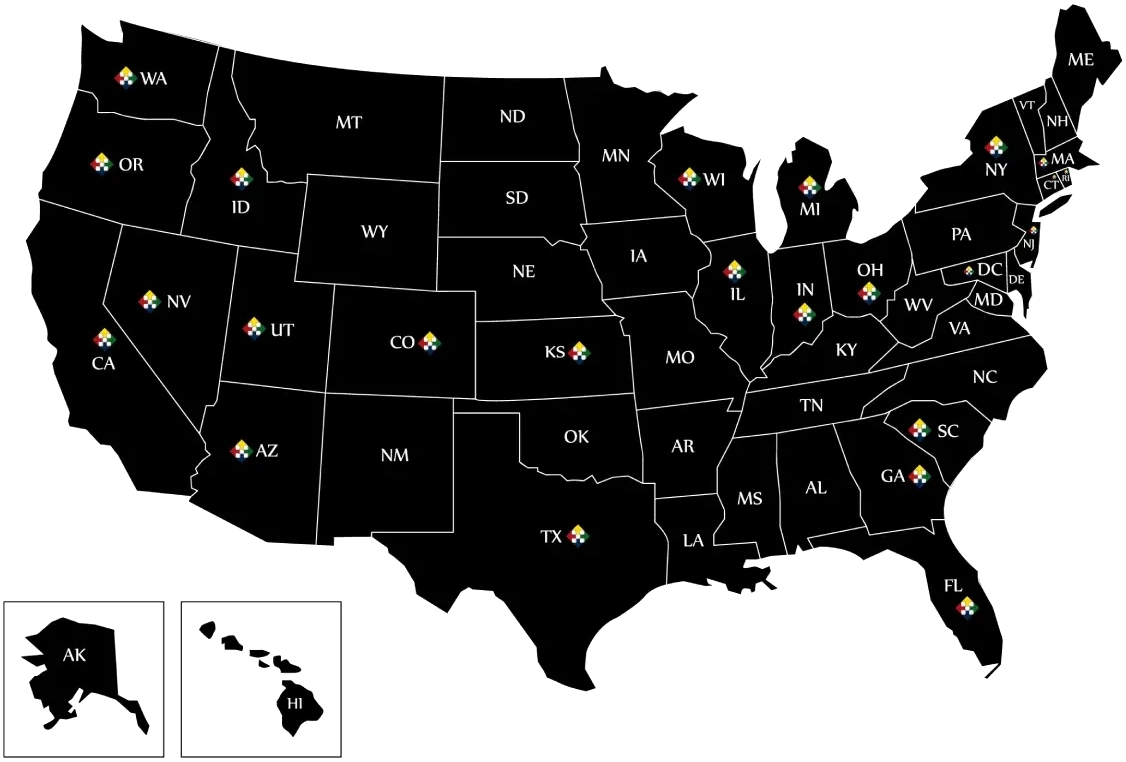
Why Operations Teams Across 50 States Choose Relocation Strategies
Relocation Strategies is not a moving company. It is America’s commercial moving and project management company — and the distinction matters enormously for warehouse and distribution center relocations.
The firm has completed over 80 projects for a single national client across 20 states and Canada. It managed the phased relocation of Cali Wine’s 48,000 square foot production facility — including fermentation tanks, a bottling line, a refrigeration system, and a water filtration system — without interrupting production. It has managed distribution center relocations for 3PL providers, food and beverage manufacturers, and industrial operations across every major US logistics market.
The competitive bidding process Relocation Strategies applies to every vendor category consistently produces savings against initial market estimates. The project management fee is almost always recovered through vendor savings and avoided downtime costs before move day arrives.
The standard: Every Relocation Strategies warehouse relocation engagement delivers a fully operational new facility — racking installed, WMS live, inventory verified, and team ready — on day one. Minimal downtime is not the aspiration. It is the baseline.
Warehouse Relocation — Frequently Asked Questions
Warehouse relocation costs in 2026 vary based on facility size, racking scope, distance, and operational complexity. A small warehouse of under 20,000 square feet relocating within the same metro area typically runs $50,000 to $150,000 including project management, movers, racking, and IT. A mid-sized distribution center of 50,000 to 150,000 square feet commonly runs $200,000 to $600,000. Large-scale 3PL facilities and multi-site consolidations run $1 million and above. The most underestimated cost in any warehouse relocation is unplanned downtime from poor sequencing — which can run $10,000 to $50,000 per day for active fulfillment operations. Relocation Strategies’ competitive bidding process consistently produces savings against initial estimates, with the project management fee routinely recovered through vendor savings alone.
The pallet racking decision in a warehouse relocation is one of the highest-impact choices the operation will make — and it must be made early. Relocating existing racking requires certified disassembly, transport, and reinstallation with inspection for damage or code compliance issues at the new facility. Procuring new racking requires lead times that, in 2026, can run eight to fourteen weeks depending on the supplier and configuration. Relocation Strategies evaluates the new building’s column spacing, floor load ratings, ceiling height, and workflow requirements against the existing racking configuration in the planning phase — before any procurement decision is made — and manages competitive bidding across racking suppliers if new procurement is the right call.
Yes. Relocation Strategies has vendor networks in every major US industrial logistics market — California’s Inland Empire, Dallas-Fort Worth, Chicago, Atlanta, Nashville, Phoenix, and the I-35 border corridor — specifically because tariff-driven and nearshoring-driven supply chain repositioning is creating compressed timelines that require on-the-ground execution capability in multiple markets simultaneously. For businesses repositioning their distribution networks in response to 2026 tariff conditions, Relocation Strategies can manage the origin decommissioning and the destination buildout, racking, and operational transition under one project plan with one point of accountability.
Planning a warehouse or distribution center relocation in 2026?
Relocation Strategies manages warehouse and distribution center relocations of every size and complexity across all 50 states — from small single-site moves to large-scale 3PL consolidations and tariff-driven supply chain repositioning. One team. Every vendor. Minimal downtime.
Additional Resources from Relocation Strategies
Industrial Moving and Relocation Checklist — Step-by-step planning guide for warehouse and industrial moves
Office Move and Relocation Checklist — Planning guide for commercial office moves of every size
Manufacturing Facility Relocation — How Relocation Strategies manages industrial and manufacturing moves
Case Studies — Real warehouse and industrial relocation projects completed nationwide
Relocation FAQs — Answers to the most common warehouse and commercial move questions
Request a Free Consultation — Talk to Relocation Strategies about your warehouse move
- Moving a Warehouse or Distribution Center in 2026?
- What Commercial Space Planners Offer Turnkey Design and Build Services?

- Relocation Strategies Positions as Commercial Office Move Partner for U.S. Real Estate Brokers in 2026
- Moving Your Business To or From California

- Industrial Warehouse Relocation Strategy Guide
- Press Release (4)
- Transition Strategy (8)
- Project Management (6)
- Laboratory Relocation (4)
- Specialty Relocations (2)
- Corporate Relocation (9)
- FF&E (1)
- Professional Relocation Company (3)
- Data Center Movers (2)
- Factory Relocation (3)
- Heavy Equipment (3)
- Phoenix Commercial Relocation (2)
- Hospital Relocation (1)
- Arizona Business Relocation (1)
- Scottsdale Commercial Relocation (2)
- Tucson Business Relocation (1)
- Relocation Resources (48)
- Industrial Project Management (3)
- General (5)
- Real Estate (3)
Recent Post


Categories
